
- News
- City News
- ludhiana News
- Ludh textile industry struggles as Asian nations benefit from preferential treatment
Trending
This story is from August 18, 2024
Ludh textile industry struggles as Asian nations benefit from preferential treatment
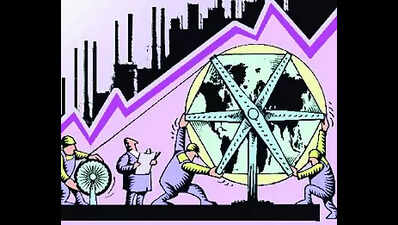
According to the stakeholders of the Ludhiana textile and garment industry, countries such as Bangladesh, Pakistan, and Vietnam have seen continuous growth in their textile and garment sectors during this period, while the local industry has suffered mounting losses.
The preferential treatment in question stems from the policies of developed nations, such as the United States, the European Union and the United Kingdom, which charge little to no import duties on goods from these neighbouring Asian countries. These countries benefit from their status as: least developed or developing nations, resulting in favourable trade terms. In contrast, local exporters face steep duties, making their products less competitive in the global market, stated associations of industry.









Badish Jindal, president of the Federation of Punjab Small Industries Association (FOPSIA), said this disparity has led to a steady increase in imports from the Asian countries, at the expense of local garment industry
In a letter to the World Bank, Jindal criticised the relief extended to Bangladesh, Pakistan, and Vietnam, arguing that it has shifted the global market away from local manufacturers.
Jindal said if these policies are not revised, the consequences could be devastating for the industry, particularly in terms of employment. The domestic textile and garment sector is the second-largest employment provider in India, following agriculture.
He said, “This sector had been growing steadily until 2017, however, thereafter, it has faced significant setbacks due to the unfavourable World Bank and WTO policies. The industry is now at risk of losing jobs due to ongoing financial struggles.”
Jindal further added, “While the global demand for textiles and garments is increasing at a rate of 12.3%, export of local manufacturers is declining, in contrast to the exponential growth seen in Bangladesh, Pakistan, and Vietnam.” “There is a need to immediately halt the export assistance provided to these countries to restore trade balance and prevent further damage to the local industry. Failure to address this issue will have severe repercussions for the sector,” said Jindal.
Vinod Thapar, the chairman of the Knitwear Club, said 20% import duty is charged on products imported from India, while the products manufactured in neighbouring Asian countries are 100% exempted from import duty.
We also published the following articles recently
Bdesh crisis an opportunity for domestic textile sector
Political unrest in Bangladesh has impacted its textile industry, prompting international buyers to consider alternatives. Ludhiana-based manufacturers have noticed increased export inquiries. However, experts believe this growth could be temporary, contingent on the duration of Bangladesh's instability. The situation coincides with the crucial pre-Christmas shopping season, accelerating buyers' search for reliable suppliers.
Political unrest in Bangladesh has impacted its textile industry, prompting international buyers to consider alternatives. Ludhiana-based manufacturers have noticed increased export inquiries. However, experts believe this growth could be temporary, contingent on the duration of Bangladesh's instability. The situation coincides with the crucial pre-Christmas shopping season, accelerating buyers' search for reliable suppliers.
Boost to India's sustainable textile industry: Assams Eri Silk earns prestigious Oeko-Tex certification
India's North Eastern Handicrafts and Handlooms Development Corporation (NEHHDC) achieved the Oeko-Tex certification for Eri Silk on India's 78th Independence Day. Recognized for its ethical and sustainable production, Eri Silk's global export potential has been significantly boosted. Union minister Jyotiraditya Scindia praised this milestone for promoting Assam's cultural heritage and sustainable fashion globally.
India's North Eastern Handicrafts and Handlooms Development Corporation (NEHHDC) achieved the Oeko-Tex certification for Eri Silk on India's 78th Independence Day. Recognized for its ethical and sustainable production, Eri Silk's global export potential has been significantly boosted. Union minister Jyotiraditya Scindia praised this milestone for promoting Assam's cultural heritage and sustainable fashion globally.
Delhi govt drafts key policies for economic and industrial growth
The Delhi government finalized draft policies that may shape industrial and economic growth in the capital. These policies may soon be submitted for approval once the chief minister returns. The drafts include the Industrial and Economic Development Policy, the ESDMR Policy for electronics, and the City Logistics Policy aimed at boosting employment and infrastructure.
The Delhi government finalized draft policies that may shape industrial and economic growth in the capital. These policies may soon be submitted for approval once the chief minister returns. The drafts include the Industrial and Economic Development Policy, the ESDMR Policy for electronics, and the City Logistics Policy aimed at boosting employment and infrastructure.
End of Article
FOLLOW US ON SOCIAL MEDIA








Photostories

Hot Picks
TOP TRENDING
Explore Every Corner
Across The Globe
Popular Categories
Hot on the Web
Top Trends
India vs EnglandBlackhawk Pilot KilledMichael JordanHarshit RanaBasit AliDerek LivelyPakistan Champions Trophy SquadTax CalculatorBudget 2025 Income TaxChampions LeagueMoin KhanUS Plane CrashSwara Bhaskar X PostDelhi Election 2025NFL Pro Bowl 2025Budget 2025 Live UpdatesBangladesh Football MatchLive Cricket Score
Trending Topics
Rakesh RoshanEmergency Box Office CollectionGame Changer Box Office CollectionCareer PredictionsBeetroot Chickpea KebabsValentines Day Week ListBaba VangaBasan Panchami WishesMamta KulkarniDeva ReviewKruger National ParkFebruary 2025 Health PredictionsFebruary 2025 Wealth PredictionsFebruary 2025 Career PredictionsFebruary 2025 Love PredictionsRapper Raftaar WeddingRohan KhaunteGujarat School RapeRajasthan High CourtHarpreet Kaur Babla
Living and entertainment
Latest News
Alex Bregman’s free agency sparks debate as fans remain divided over New York Yankees’ lack of interestShohei Ohtani and Dodgers Players Visit Firefighters at Station 69 to Show Their Support Amid WildfiresShark Tank India 4: Perfume brand founder Shashank Chourey says he seeks knowledge, not money; Anupam Mittal quips, 'Gyaan toh tujhe pata hai kiske paas hai'What is a hyperbaric chamber and how it exploded to kill a 5-year-old Michigan boy?Did life stand a chance on Mars amid extreme climate shifts?This simple morning habit can lower stroke riskHyperbaric chamber explodes killing 5-year-old Michigan boy, mother injuredAbhishek Bachchan says Mani Ratnam sees something in him that he does not recognise himself5-year-old detained over fee, school officials bookedWWE Veteran Set to Return After 3 Years: Here’s What You Need to KnowAmended Aadhaar authentication rules to boost ease of living notifiedThis newly identified species of monkey is already on the verge of extinction; know whyWill Joel Embiid play tonight against the Denver Nuggets? Latest update on the Philadelphia 76ers star's injury report (January 31, 2025)Maintenance for working woman? Supreme Court to decideITBP constable gets 10 years in jail for raping colleague in 2021Donald Trump's Canada, Mexico tariffs from February 1: Karoline Leavitt slams Trudeau's 'outlandish' remarkTom Brady once opened up about his divorce, calling it "amicable" despite the "challenging situations"Tamannaah Bhatia on self-love: ‘I touch every part of my body and thank it for withstanding the day’
Copyright © 2025 Bennett, Coleman & Co. Ltd. All rights reserved. For reprint rights: Times Syndication Service